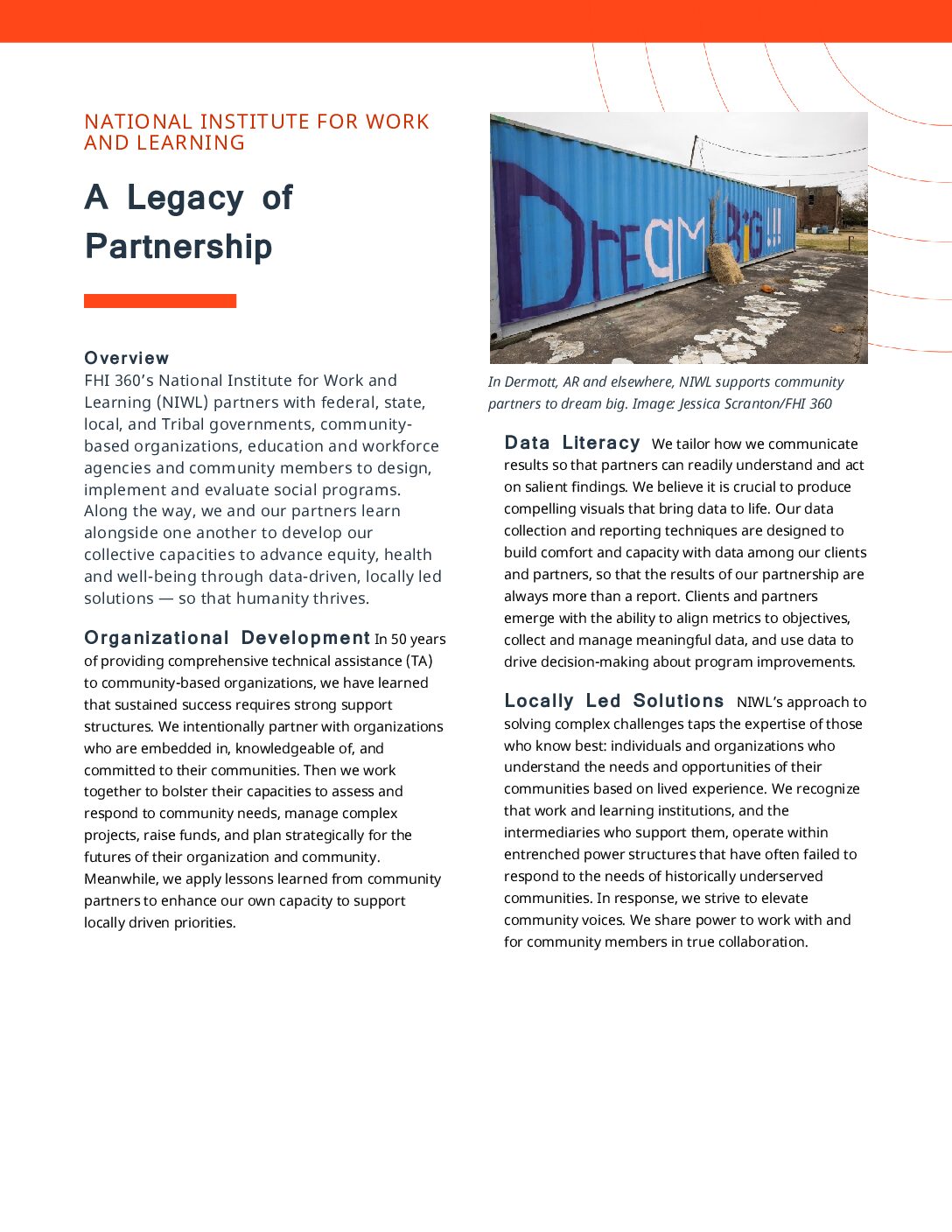
FHI 360’s National Institute for Work and Learning (NIWL) partners with federal, state, local, and Tribal governments, community-based organizations, education and workforce agencies and community members to design, implement and evaluate social programs. Along the way, we and our partners learn alongside one another to develop our collective capacities to advance well-being through data-driven, locally led solutions — so that humanity thrives.
Type: Article | Case Study | Overview | Story
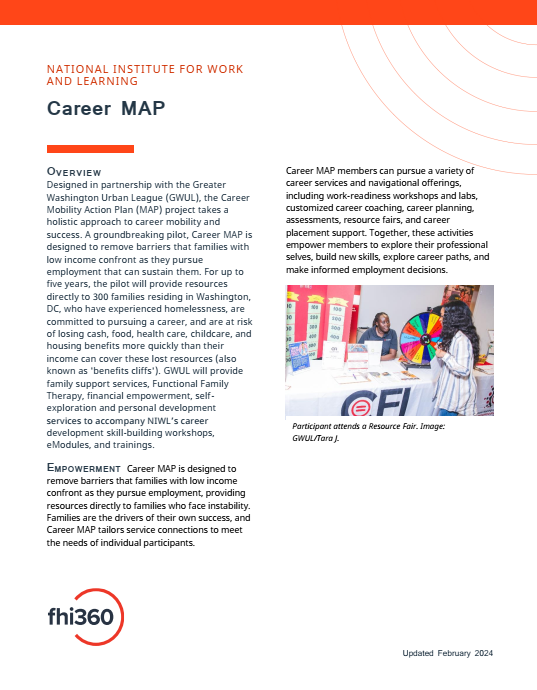
Designed in partnership with the Greater Washington Urban League (GWUL), the Career Mobility Action Plan (MAP) project takes a holistic approach to career mobility and success. A groundbreaking pilot, Career MAP is designed to remove barriers that families with low income confront as they pursue employment that can sustain them.
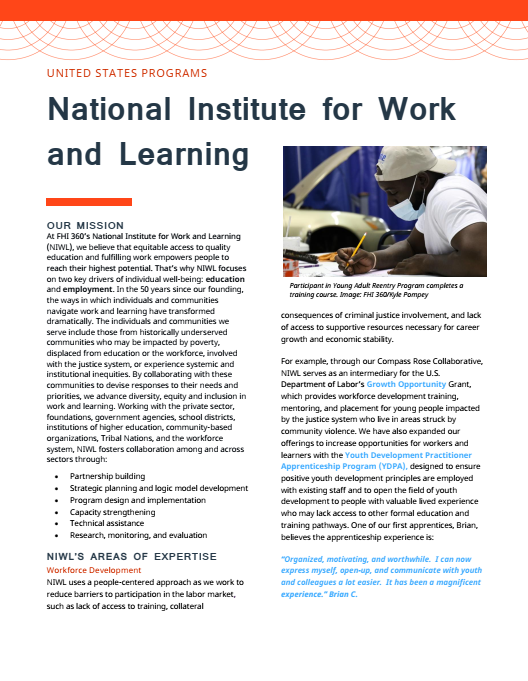
This fact sheet profiles the work of FHI 360’s National Institute for Work and Learning (NIWL), which focuses on two key drivers of individual well-being: education and employment.

The National Institute for Work and Learning (NIWL) at FHI 360 conducts high-quality research and evaluation to inform policies, practices and program models in education, employment, social services, and community systems. Our expertise is cross-sectoral and interdisciplinary. Our approach combines methodological rigor with deep content knowledge and a commitment to collaboration.
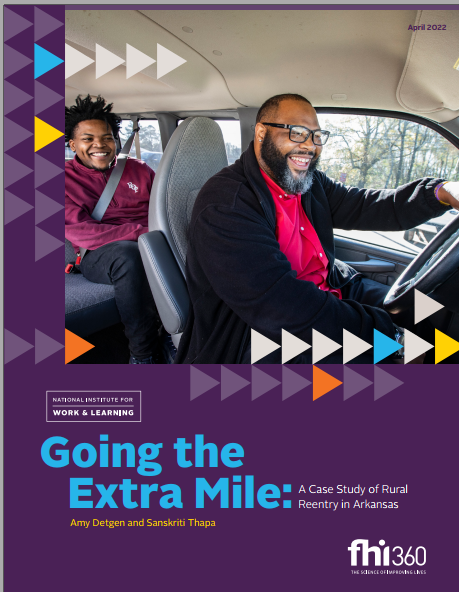
Going the extra mile: A case study of rural reentry in Arkansas provides an exploration of a rural community in southeast Arkansas that takes a unique, individualized approach to reentering young adults ages 18-24. The received wisdom on rural reentry is that it is generally more difficult than reentry in an urban setting. Phoenix Youth and Family Services, which serves a rural part of Arkansas, has excelled on key outcomes as part of FHI 360’s Compass Rose Collaborative (CRC)1, a project funded by the U.S. Department of Labor to improve the education and employment outcomes of young adults,
ages 18 through 24, after involvement in the U.S. criminal justice system.
Phoenix Youth and Family Services provides wraparound support services to its participants to help juveniles, young adults, and families secure a safe, healthy, and strong life
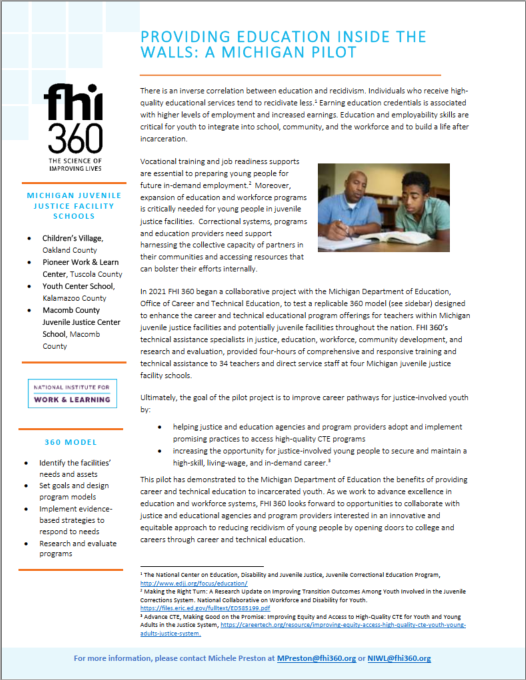
In 2021 FHI 360 began a collaborative project with the Michigan Department of Education, Office of Career and Technical Education, to test a replicable 360 model designed to enhance the career and technical educational program offerings for teachers within Michigan juvenile justice facilities and potentially juvenile facilities throughout the nation. FHI 360’s technical assistance specialists in justice, education, workforce, community development, and research and evaluation, provided four hours of comprehensive and responsive training and technical assistance to 34 teachers and direct service staff at four Michigan juvenile justice facility schools. Learn more about how educational programs offered in facilities reduce recidivism and improve employment outcomes.
This highlights the work and success of NIWL programming in 2020.
This document provides a brief overview of NIWL’s capabilities as it relates to pivoting in person conferences to engaging virtual events
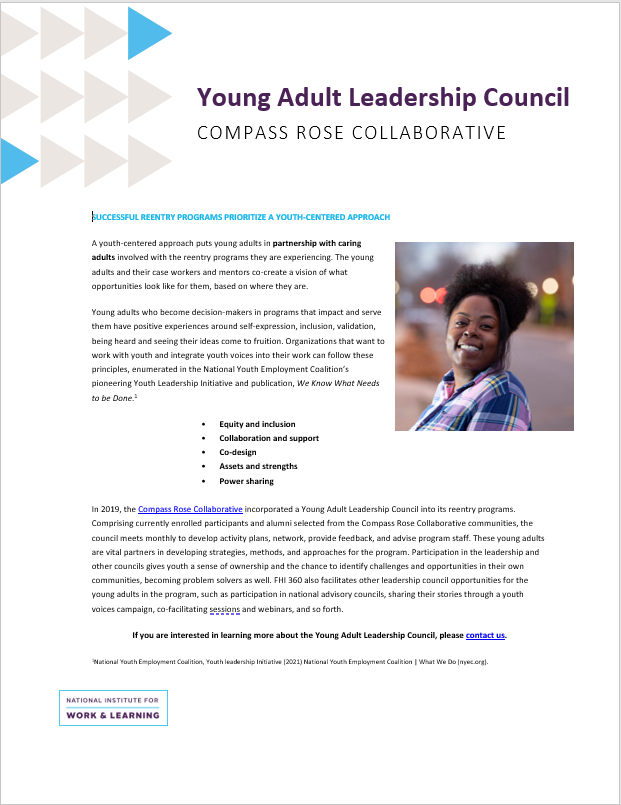
Launched in 2019, the Young Adult Leadership Council is a key component of NIWL’s Compass Rose Collaborative, a young adult reentry program. This program combines the principles of youth-adult partnerships with reentry programming.

This fact sheet profiles FHI 360’s National Institute for Work and Learning (NIWL) workforce development efforts.