
Found 15 Results
Substance Abuse Prevention Programming in Native Communities
Substance Abuse Prevention Programming examines the inclusion of Indigenous knowledge, culture, and traditions in health interventions for Native youth. Culture-centric programs promote holistic healing, connection to community, and beneficial, lasting change. Read the full report to learn more.
Community-Driven TOC Tool
This tool for Facilitators can be used to support community engagement and respect for local norms in evaluation planning and theory of change development. Click the resource to access the full tool.
Art as Medicine: Art-Based Programming
Art as Medicine: Art-Based Programming examines the benefits of art as an avenue for emotional expression and healing for justice-involved youth. Art-based programs can help youth process emotions, manage behavioral issues, and develop healthier responses to stress, in addition to building their interpersonal, problem-solving, and emotional regulation skills. Read the full report to learn more.
Harnessing the Healing Power of Shared Experience: Mentorship and Peer Programs
Mentoring and peer programs rooted in cultural values are proving to be powerful tools for supporting American Indian and Alaska Native youth. These initiatives, ranging from drumming-based mentoring and equine therapy to youth-led courts and peer recovery support, build on trusted relationships and shared lived experience to foster resilience, reduce justice involvement, and promote mental […]
Compass Rose Outcome Indicators Overview
FHI 360’s National Institute for Work and Learning (NIWL) provides support to education providers, workforce trainers, and their local partners to improve education and employment outcomes for youth aged 18-24 involved with the criminal legal system. Using a statistical lens, this document details the impact of NIWL’s five U.S. Department of Labor-funded Compass Rose Collaborative […]
Breaking Cycles of Adversity: Effective Prevention Strategies in Schools
Breaking Cycles of Adversity explores how school-based prevention strategies foster educational success, strengthen social connections, and reduce interactions with the justice system. Culturally relevant approaches that promote positive decision-making can support healthy relationships, strengthen identity, and improve mental and physical health, which are critical protective factors against justice system involvement. Read the full report to […]
Honoring the Past to Empower the Future: Trauma-Informed and Healing-Centered Approaches to Caring for Youth in the Criminal Justice System
Honoring the Past to Empower the Future reviews the landscape of holistic and inclusive approaches to trauma-informed and healing-centered care for youth as implemented by tribal governments and organizations. Approaches that incorporate medicinal practices and cultural values, focus on the healing power of empathy, draw on the wisdom of elders and spiritual leaders, and embrace […]
A Community Approach to Addressing Native Incarceration: Tribal Healing to Wellness Courts
Tribal Healing to Wellness Courts have emerged as a promising community-based, culturally competent solution to disproportionate Native incarceration in the United States, drawing on the community to appropriately address the needs of justice-involved Native Americans. This review examines the disparities in Native incarceration in federal and state systems, as well as how these disparities can […]
Going the Extra Mile: A Case Study of Rural Reentry in Arkansas
Going the extra mile: A case study of rural reentry in Arkansas provides an exploration of a rural community in southeast Arkansas that takes a unique, individualized approach to reentering young adults ages 18-24. The received wisdom on rural reentry is that it is generally more difficult than reentry in an urban setting. Phoenix Youth […]
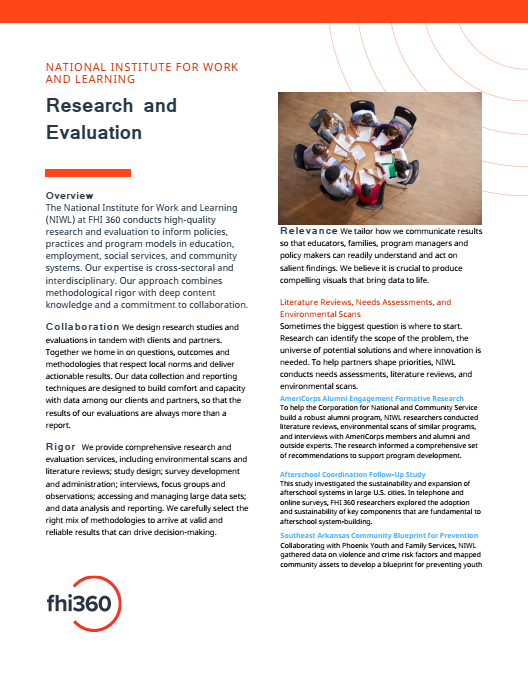
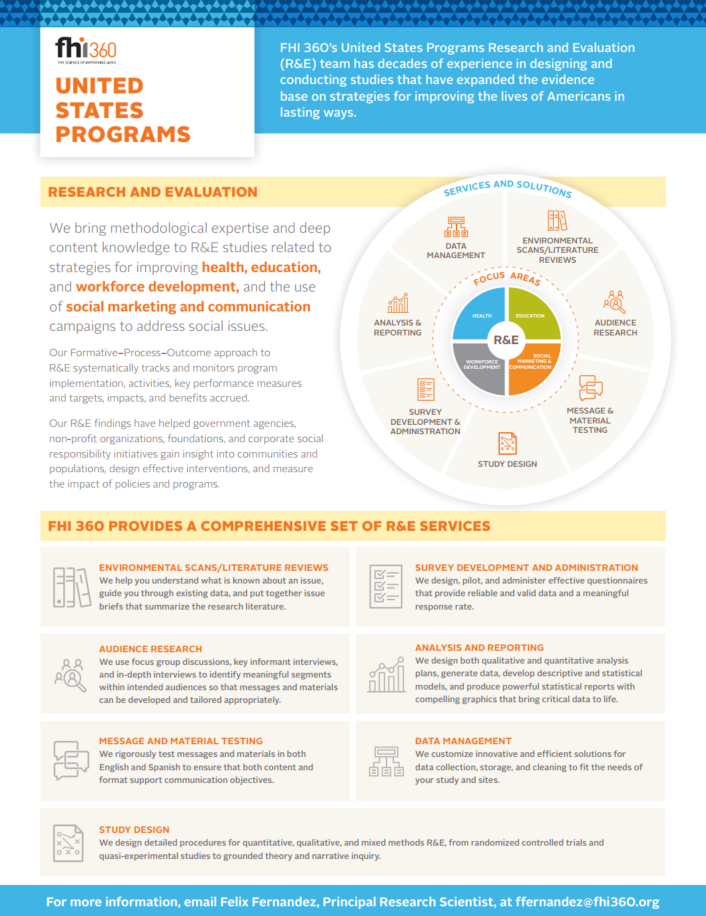
Research & Evaluation Fact Sheet
The National Institute for Work and Learning (NIWL) at FHI 360 conducts high-quality research and evaluation to inform policies, practices and program models in education, employment, social services, and community systems. Our expertise is cross-sectoral and interdisciplinary. Our approach combines methodological rigor with deep content knowledge and a commitment to collaboration.