Found 9 Results
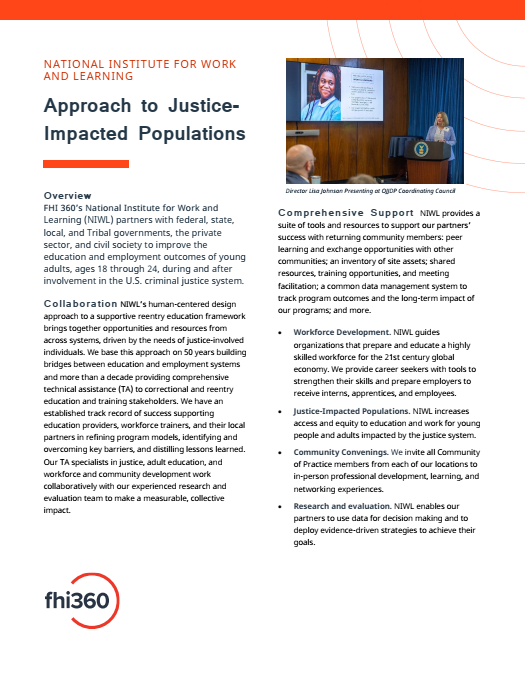
Approach to Justice-Impacted Populations Overview
FHI 360’s National Institute for Work and Learning partners with federal, state, local, and Tribal governments, the private sector, and civil society to improve the education and employment outcomes of young adults, ages 18 through 24, during and after involvement in the U.S. criminal justice system. Read this overview of our comprehensive services.
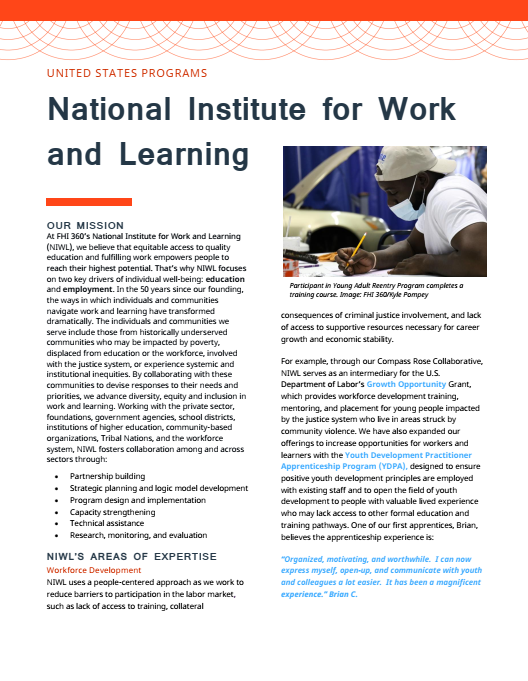
National Institute for Work and Learning (NIWL) Fact Sheet
This fact sheet profiles the work of FHI 360’s National Institute for Work and Learning (NIWL), which focuses on two key drivers of individual well-being: education and employment.
2022 NIWL Annual Report
The individuals and communities we serve include those from historically underserved communities, who may be impacted by poverty, displaced from education or the workforce, involved with the justice system, or experience systemic and institutional inequities. By collaborating with these communities to devise responses to their needs and priorities we advance diversity, equity, and inclusion in […]
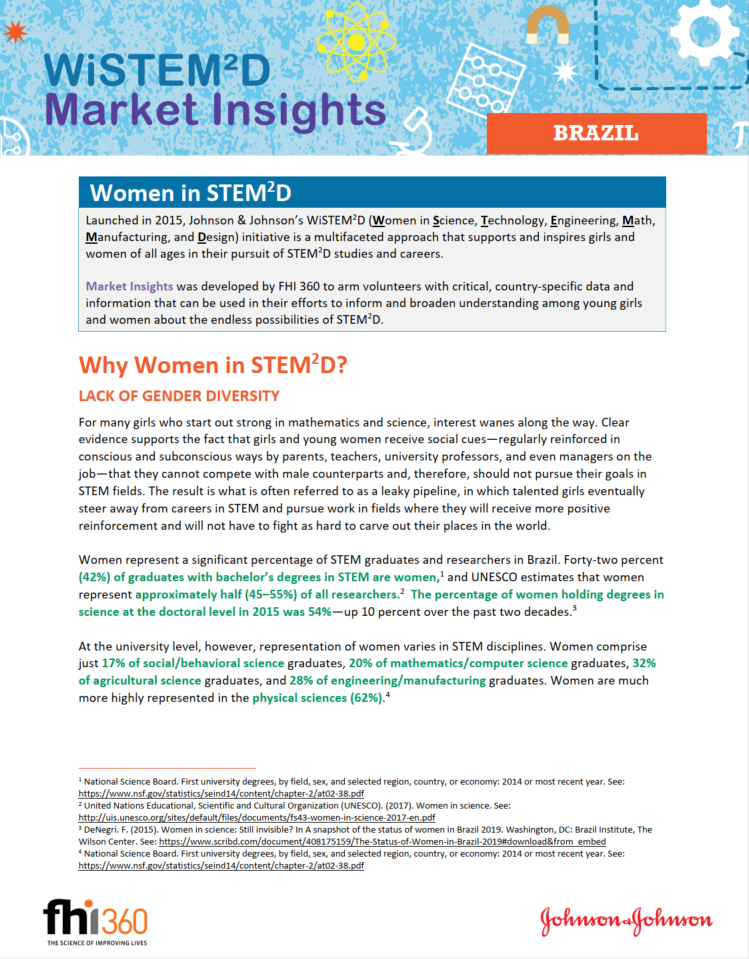
STEM2D Market Insights
Critical, country-specific data and information about the growing demand for STEM²D talent and the status of a diverse talent pipeline. Customized Market Insights are available for countries throughout Africa, Asia, Europe, Middle East, North America, Latin America, and South America. Click your language below to download the PDF for the country of your choice.
Workforce Development Inside the Walls: A Rapid Employment Model
FHI 360 has launched the Post-Release Employment Program (PREP) to fast-track participants from behind bars to employment within six weeks. Participants complete two-thirds or more of the employment training pre-release with expedited connection to employers upon graduation. PREP is designed to respond to the critical needs and challenges of individuals returning from jails or prison […]
Changing Language, Changing Minds: Using Restorative Language to Promote Solidarity and Equity
Restorative, or humanizing language, removes stereotypes and labels and shows solidarity and support to people and communities impacted by a variety of circumstances. Through this guide, we encourage our clients and partners to support and lead change.
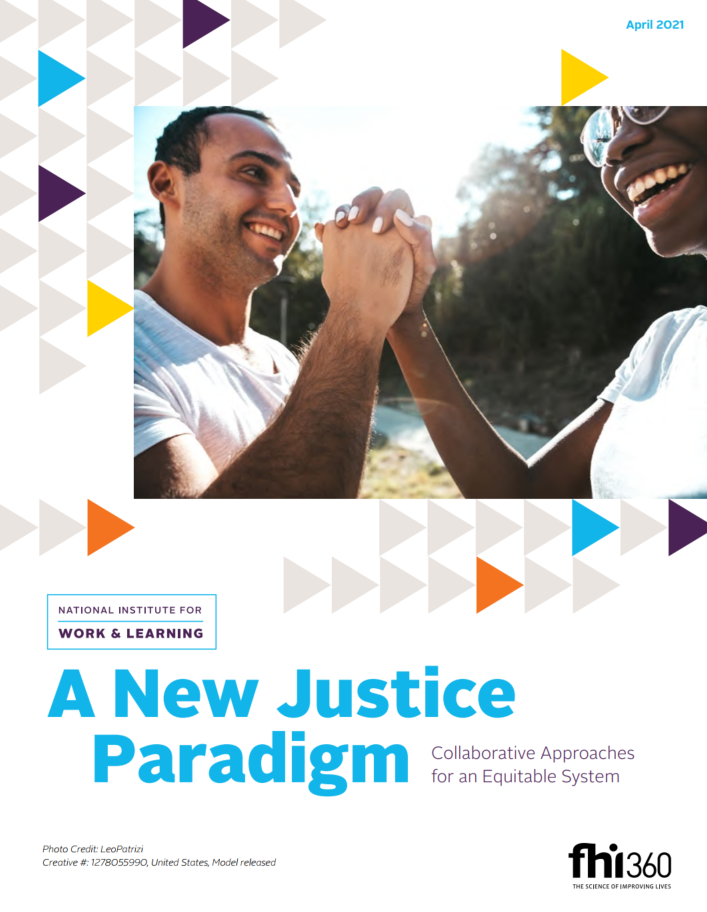
A New Justice Paradigm: Collaborative Approaches for An Equitable System
A New Justice Paradigm: Collaborative Approaches for an Equitable System, explores the justice system from the perspective of criminal justice practitioners and young adults aged 18 to 24 who have been impacted by the justice system. We take this approach both to understand better— at the ground level—the system that exists and to help imagine […]
NIWL 2020 Year In Review
This highlights the work and success of NIWL programming in 2020.
Reimagining Workforce Policy in the Age of Disruption: A State Guide for Preparing the Future Workforce Now
The Future Workforce Now initiative developed an agenda for U.S. state policy leaders to prepare the workforce, addressing technological disruptions affecting current and future workers and workplaces.