Found 92 Results
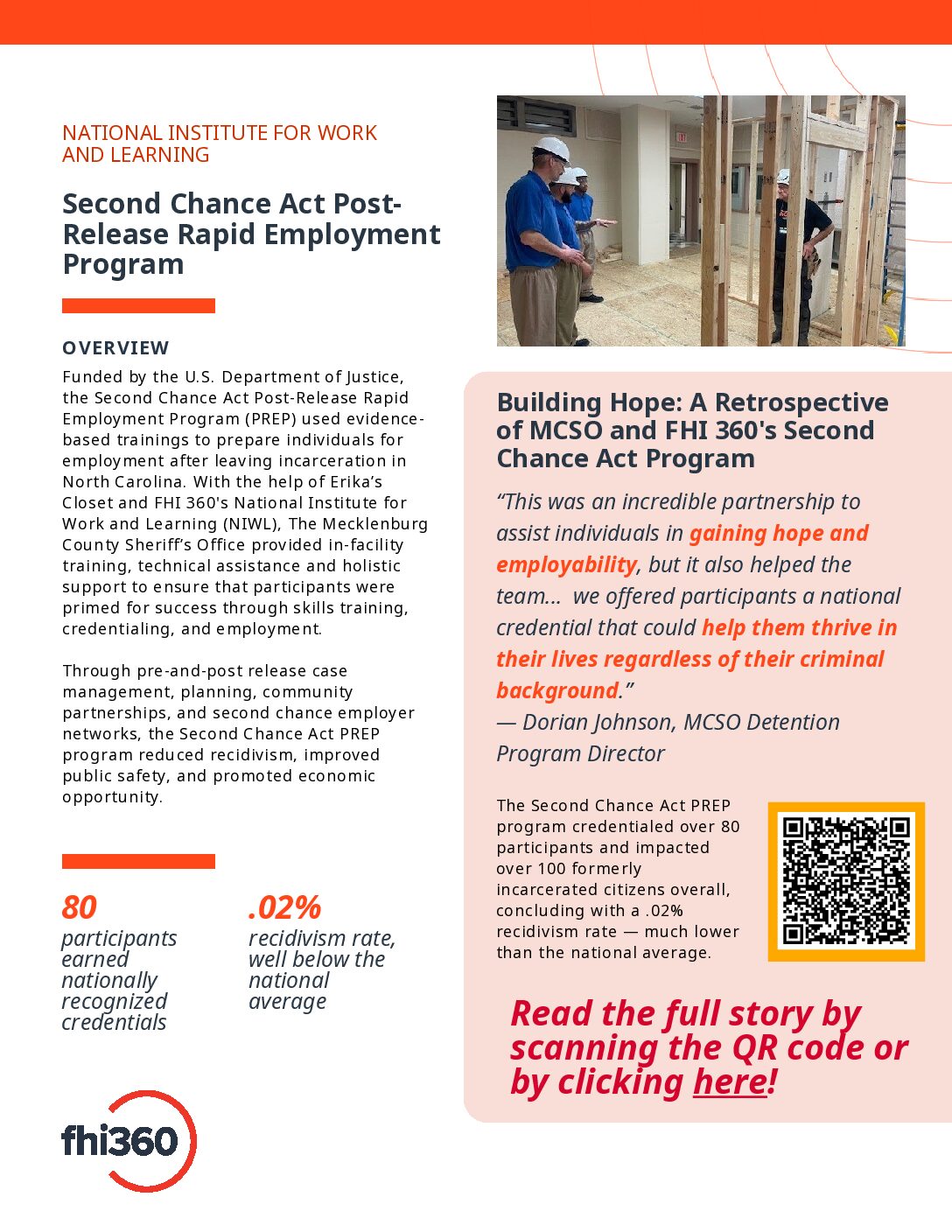
Second Chance Act Post-Release Rapid Employment Program
Funded by the U.S. Department of Justice, the Second Chance Act Post-Release Rapid Employment Program (PREP) used evidence-based trainings to prepare individuals for employment after leaving incarceration in North Carolina through a partnership between FHI 360’s National Institute for Work and Learning, Erika’s Closet, and the Mecklenburg County Sheriff’s Office. Read the full fact sheet […]
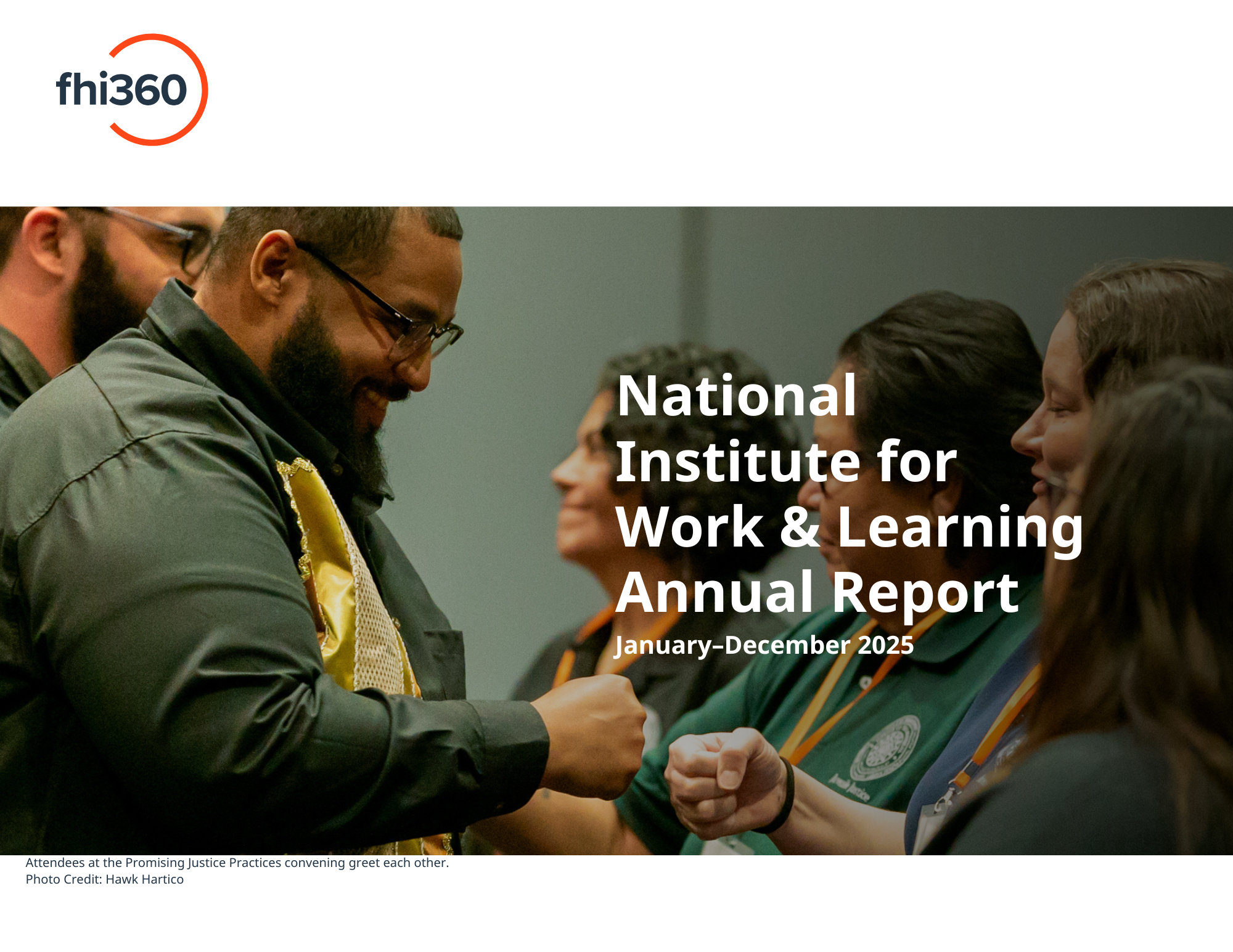
2025 NIWL Annual Report
Our work in 2025 reflects our commitment to meeting people where they are and building systems that support long-term economic mobility. Whether developing registered apprenticeships, working with corporate partners to build career pathways, supporting individuals returning from incarceration, or helping families navigate career exploration and advancement, NIWL focused on connecting learning to opportunity, and opportunity […]
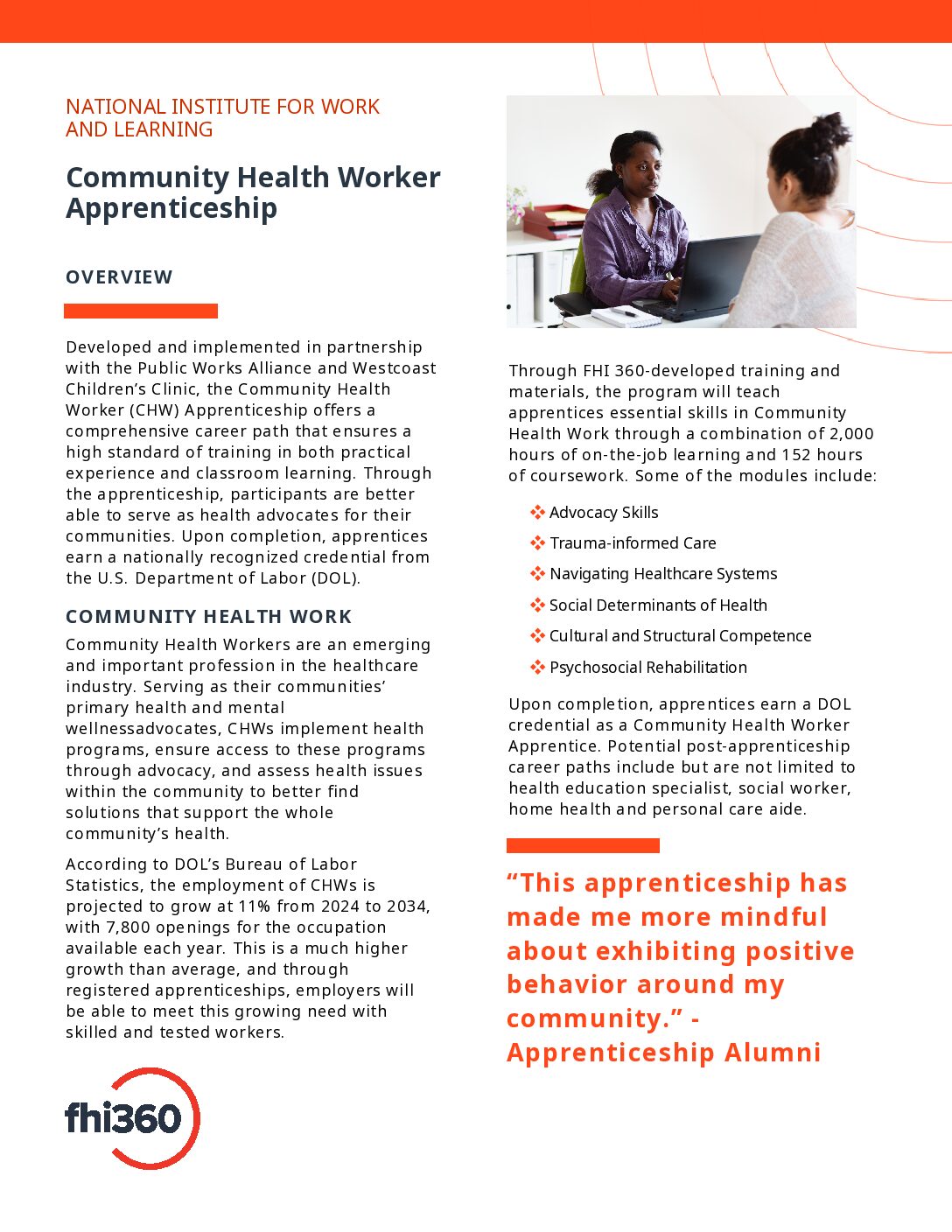
Community Health Worker Apprenticeship
Developed and implemented in partnership with the Public Works Alliance and Westcoast Children’s Clinic, the Community Health Worker (CHW) Apprenticeship offers a comprehensive career path that ensures a high standard of training in both practical experience and classroom learning. Through the apprenticeship, participants are better able to serve as health advocates for their communities. Read […]

Exploring Nursing Pathways eBook (Spanish)
Esta guía de carreras en enfermería te ayudará a determinar qué puedes hacer en la escuela secundaria para prepararte para una carrera en enfermería, a identificar las opciones educativas después de la secundaria para convertirte en enfermero(a), a comprender los distintos tipos de títulos en enfermería que puedes cursar y a echarle un vistazo a […]

Exploring Nursing Pathways eBook (English)
This nursing career guide will help you determine what you can do in high school to prepare for a career in nursing, help you identify post-high school education options to become a nurse, explain the various types of nursing degrees that you can pursue, and provide you with a peek at the day-to-day responsibilities of […]
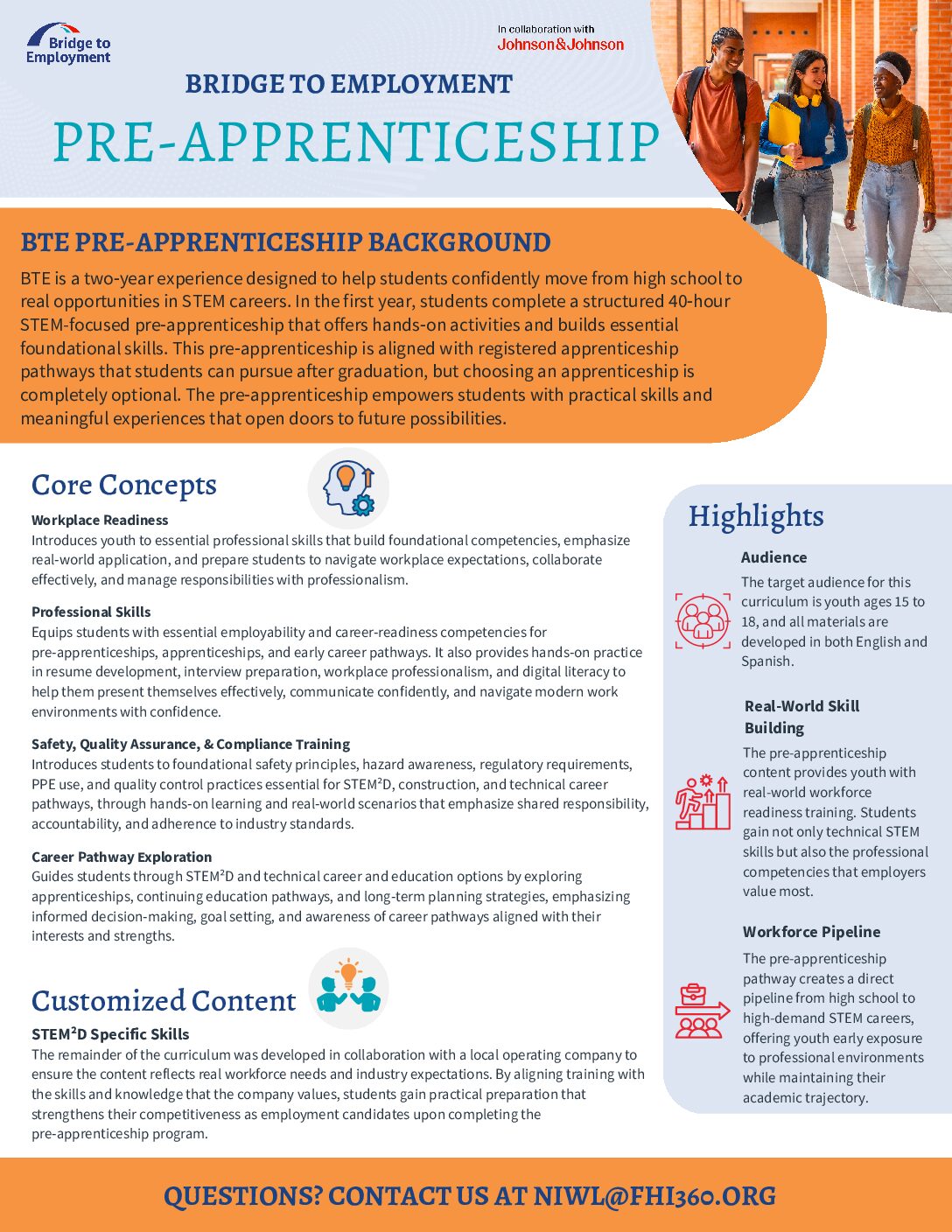
Bridge to Employment Pre-Apprenticeship Flyer
BTE is a two‑year experience designed to help students confidently move from high school to real opportunities in STEM careers. In the first year, students complete a structured 40‑hour STEM-focused pre‑apprenticeship that offers hands‑on activities and builds essential foundational skills. This pre‑apprenticeship is aligned with registered apprenticeship pathways that students can pursue after graduation, but […]

National Institute for Work and Learning Apprenticeships
FHI 360’s NIWL Apprenticeships bring together experts in workforce development to expand existing nationally registered apprenticeship programs (RAPs), such as the Youth Development Practitioner Apprenticeship (YDPA) and develop new opportunities within the care economy such as youth services, peer support, substance-use counseling, and mental health counseling. Upon completion, apprentices receive a nationally recognized credential from […]

Research & Evaluation Fact Sheet
The National Institute for Work and Learning (NIWL) at FHI 360 conducts high-quality research and evaluation to inform policies, practices and program models in education, employment, social services, and community systems. Our expertise is cross-sectoral and interdisciplinary. Our approach combines methodological rigor with deep content knowledge and a commitment to collaboration.
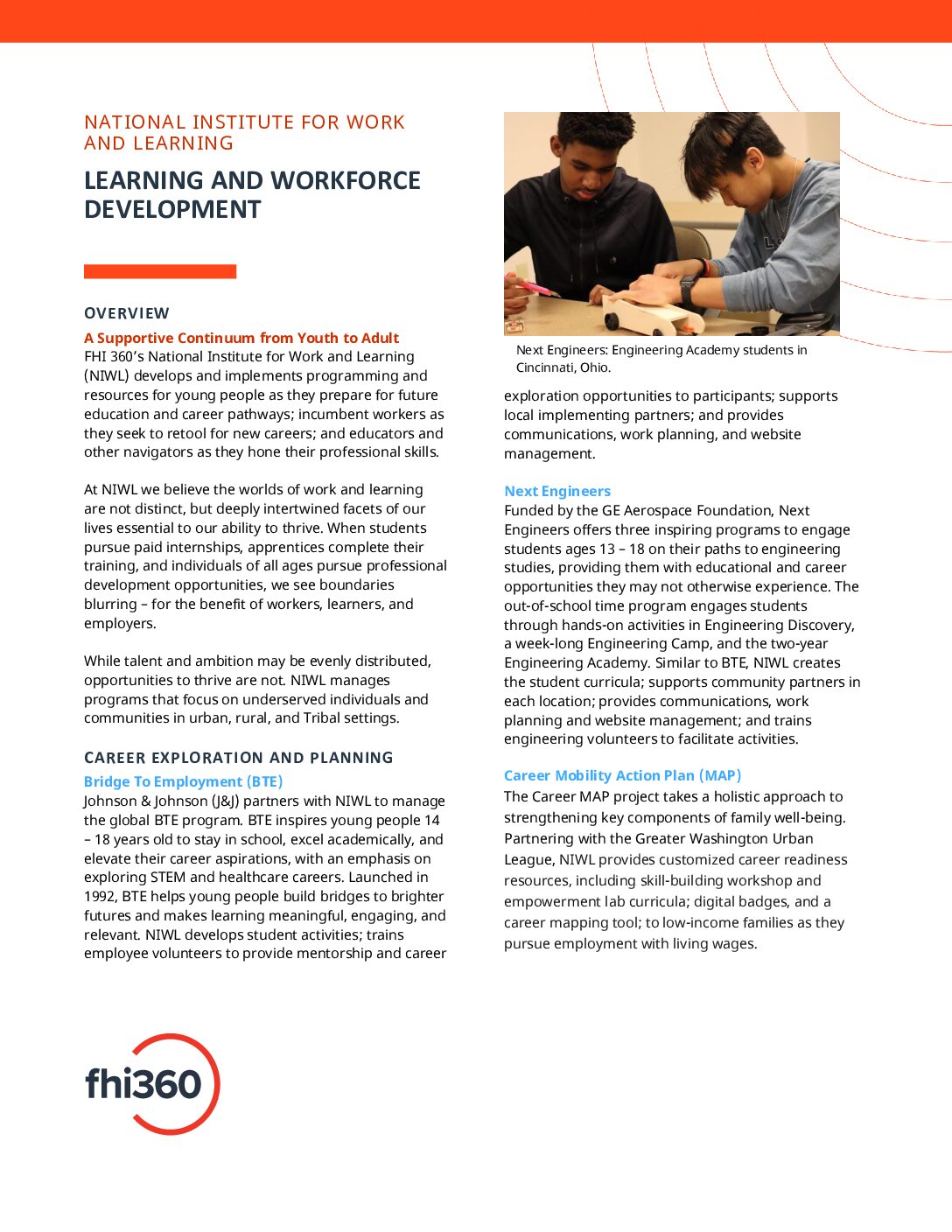
Learning and Workforce Development Overview
NIWL’s programs serve youth and young adults in career exploration, workforce development, and education to career transitions – all to serve the greater workforce environment in a way that benefits workers, learners, and employers. Read the full overview to learn more.
Art as Medicine: Art-Based Programming
Art as Medicine: Art-Based Programming examines the benefits of art as an avenue for emotional expression and healing for justice-involved youth. Art-based programs can help youth process emotions, manage behavioral issues, and develop healthier responses to stress, in addition to building their interpersonal, problem-solving, and emotional regulation skills. Read the full report to learn more.