Found 55 Results
Positive Youth Development & Communication Skills
This self-directed eLearning Module explores youth development — the growth process by which all young people seek ways to meet their basic physical and social needs, adolescent brain development, and Positive Youth Development — an approach to build competencies that are necessary to succeed in adolescence and adulthood.
For Direct Service Providers: A Trauma Informed Approach to Working with Opportunity Youth
This online course offers an introduction to the concept of trauma-informed care for adults who serve young people impacted by the justice system and foster care systems as well as those from historically underserved communities. It features a curriculum and resources developed by The RightWay Foundation in Los Angeles. This workforce product was funded by […]
For Employers: A Trauma Informed Approach to Working With Opportunity Youth
This online course offers an introduction to the concept of trauma-informed care for any employer working with young people impacted by the justice system and foster care systems as well as those from historically underserved communities. It features a curriculum and resources developed by The RightWay Foundation in Los Angeles.
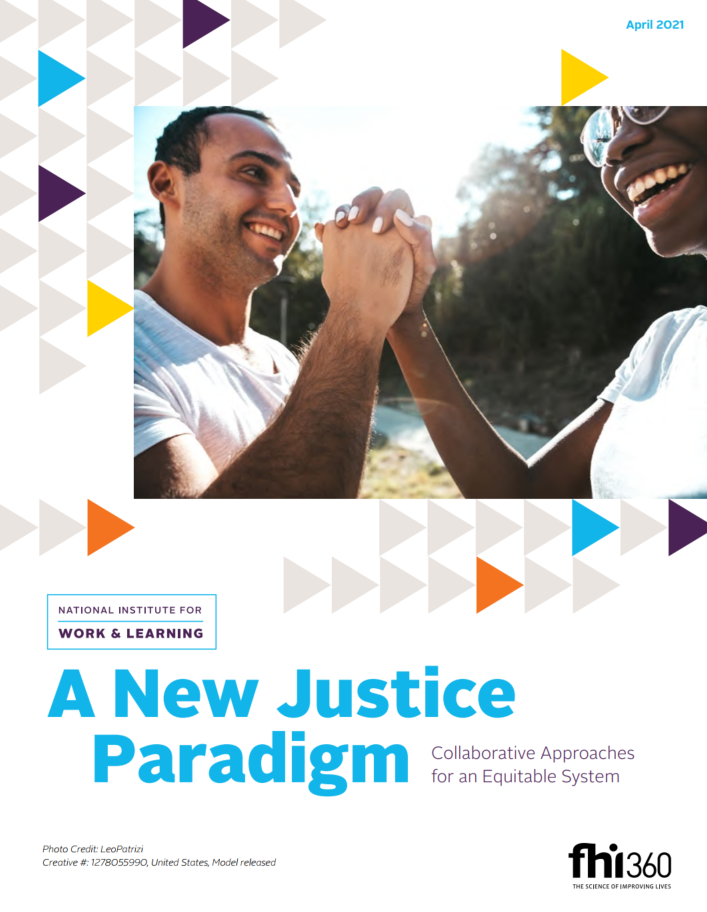
A New Justice Paradigm: Collaborative Approaches for An Equitable System
A New Justice Paradigm: Collaborative Approaches for an Equitable System, explores the justice system from the perspective of criminal justice practitioners and young adults aged 18 to 24 who have been impacted by the justice system. We take this approach both to understand better— at the ground level—the system that exists and to help imagine […]
NIWL 2020 Year In Review
This highlights the work and success of NIWL programming in 2020.
BTE Volunteer Training: Trabajar Con Jovenes
El eModule es un módulo de orientación y capacitación diseñado para los empleados de la compañía operativa local de Johnson & Johnson que son nuevos en el programa Bridge to Employment y que trabajarán con jóvenes. Los conceptos clave introducidos incluyen el desarrollo del cerebro de los adolescentes, el desarrollo positivo de los jóvenes, la […]
The Show Must Go On: FHI 360’s Alliance Building and Training Session (ABTS) As A Model Online 3-day Event
This document provides a brief overview of NIWL’s capabilities as it relates to pivoting in person conferences to engaging virtual events
Education and Career Plan Overview
The Education & Career Plan (ECP) is a user-friendly digital tool that builds on FHI 360’s College and Career Readiness: A Guide for Navigators, which helps both students and Navigators map and track the college- and career-readiness journey. Four versions of the ECP are available, designed to support students pursuing different paths: those in high […]

Workforce Development Overview (Coming Soon!)
This fact sheet profiles FHI 360’s National Institute for Work and Learning (NIWL) workforce development efforts.
College & Career Readiness Capabilities Overview
This fact sheet profiles the College & Career Readiness work of FHI 360’s National Institute for Work and Learning (NIWL).